Primary rib pattern design guidelines for reference edge alignment
-
The function of the primary rib pattern is to provide the best support to the media during transport. If the media touches a certain surface, then that surface must contain the primary rib pattern.
-
The feed path should guide the leading edge of the media into the primary guide surface and not the secondary surface. This alignment provides a determinate location for the leading edge of the media on the guide surface that provides the best support.
-
The incidence angle of the leading edge of the media as it touches the primary guide surface should be no more than 30°. This angle eliminates media stubbing on the guides and reduces the amount of energy input into the media by the guide.
-
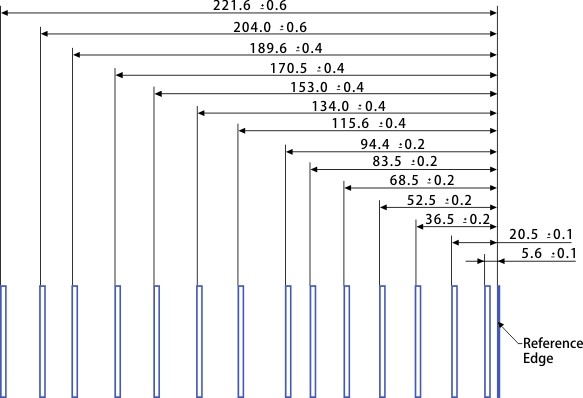
The primary rib pattern is to have the rib support extending out to between 3 and 10 mm (0.12 and 0.40 in.) from the edge of the paper. For envelopes, the rib support should extend out between 2 and 10 mm (0.08 and 0.40 in.) from the edge of the envelopes. This rib support keeps the corners of the media stiff so that it cannot fold and catch other surfaces in the printer. It also prevents the corners of the media from catching the inside surface of a paper path rib.
-
The primary rib pattern should not have any ribs closer than 3 mm (0.12 in.) to the outside edge of paper and envelopes. This rib allowance keeps the media from stubbing into a rib that is too close to the edge of the media.
-
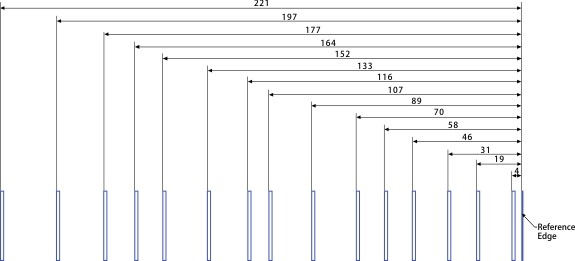
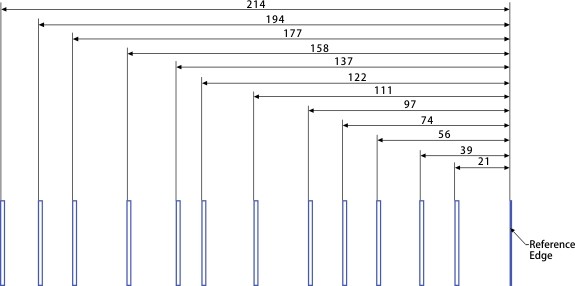
The maximum rib spacing of the primary rib pattern should not be greater than 20 mm (0.79 in.). The spacing keeps the leading edge of the media flat as it moves through the system.
 |
 |
 |